


Glynt - Earn Rewards
4.2213.00 Reviews
App Specs
- Version
- 2.7.4
- Updated On
- License
- Free
- Downloads
- 100,000+
- Developer
- Glynt
- Categories
- Lifestyle
- Platform
- Android
Screenshots

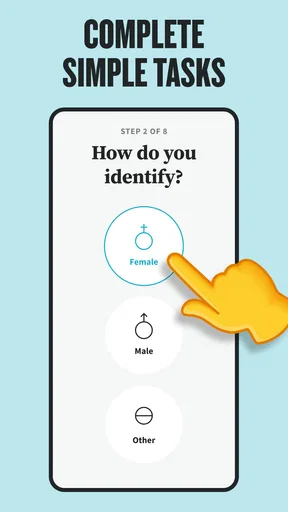

 Analysis by AppCompare
I approached Glynt as a small, practical way to turn spare moments into rewards rather than as a serious income source. That distinction matters. The app combines games and surveys in one lifestyle experience, so its appeal comes from variety: when I do not feel like answering questions, I can switch to a game, and when I want something more passive and straightforward, I can look for a survey. My overall impression is positive, but only when expectations stay realistic. Glynt is best viewed as an occasional rewards app, not a replacement for work or a guaranteed stream of money.
Developed by Glynt, the free app has reached over one hundred thousand installs and holds a 4.3 average from around five hundred ratings. Those figures suggest that it has found a real audience, although they do not remove the need to judge the experience personally. It is aimed at mature users aged seventeen and over, runs on Android eight or later, and its current version is 2.7.4. The app was released on January 23, 2025, so it is still a relatively recent option in a crowded rewards category.
How Glynt Works in Everyday Use
The basic idea is easy to understand: choose an available activity, complete it, and build toward rewards. In practice, the useful part is not the slogan but the flexibility between activity types. A survey app can feel repetitive when every opportunity demands the same kind of attention. Glynt’s combination of games and surveys gives me a better chance of finding something suitable for the moment.
That makes it particularly convenient during short gaps in the day. I can imagine opening it while waiting for an appointment, taking a brief survey during a commute, or trying a game when I want something less mentally demanding. The important habit is to treat each session as optional. If an activity feels too long, poorly matched, or not worth the effort, I would rather leave it than force myself through it simply because I have already started.
The app’s strongest practical quality is this choice. Traditional survey platforms are usually built around questionnaires, while ordinary mobile games offer entertainment without a rewards objective. Glynt sits between those two habits. It can be more engaging than a survey-only service and more purposeful than playing a random game, even though neither side is likely to satisfy someone looking for deep gameplay or dependable earnings.
Why the mixed format is more useful than it first appears
One subtle advantage is that the app can match different energy levels. Surveys require reading carefully and giving consistent answers, while games can be a better fit when I want a lighter activity. I would use surveys when I have enough concentration to avoid rushing through them, and games when I have only a few minutes or want a change of pace.
This also creates a useful stopping rule. Instead of committing to a long session, I can check what is available and decide whether the current opportunity suits me. That is a better workflow than opening a rewards app with a fixed earning target and becoming frustrated when the available tasks do not match it. Glynt works best when I use it opportunistically.
Worth Reading Before You Choose

EA SPORTS FC Mobile 26 Is a Bigger Football Game, but It Takes Time

Flipboard Shows What News Apps Must Do Beyond the Feed

Switching to Android Auto Means Rethinking Your Driving Routine

Google Calendar Makes a Crowded Week Easier to Manage

Ludo King Makes the Most of the Minutes Between Plans

Baby Panda World Brings Quick Play to Modern Phones, but Its Game Library Feels Busy
Another practical point is that the reward goal should not be the only reason to continue. A game may be enjoyable enough to justify the time even when the reward progress is modest; a survey may be worthwhile when it is short and relevant. If neither condition applies, the activity becomes a poor trade. This is where personal discipline matters more than the app’s promise.
What I would check before committing time
I would first look at the activity itself rather than assuming every option has equal value. Read the instructions, note what completion appears to require, and decide whether the time fits the moment. I would also avoid starting a survey when I am distracted. Inconsistent or rushed answers can make the experience feel more frustrating, and careful responses are more sensible whenever a questionnaire asks for opinions or personal preferences.
For games, I would set a small time boundary before beginning. Without one, a rewards game can quietly turn into ordinary screen time with a reward attached. A simple limit helps me judge whether the activity is genuinely worthwhile. This is one of the more important trade-offs with Glynt: the app can make spare time feel productive, but it can also encourage me to spend more time on my phone than I originally planned.
I would also keep my expectations about payout speed under control. The app presents rewards as an outcome of playing games and completing surveys, but that does not mean every session produces an immediate or substantial return. The value depends on which activities are available and how much effort they require. Anyone installing it should think in terms of small, occasional benefits rather than predictable earnings.
A realistic day with the app
Imagine that I have ten minutes before leaving for an appointment. I open Glynt and find a survey that appears manageable, but I am interrupted before finishing it. In that situation, I would not treat the unfinished attempt as a reason to keep checking my phone. I would close the app and return later only if I have enough uninterrupted time. If a short game is available instead, that may be a better fit for the same break.
Later that evening, I might have more patience for a questionnaire. I would complete it carefully, then stop rather than immediately searching for another task. This approach keeps the app in its proper place: a small optional activity that can fill otherwise unused time. It also prevents the common mistake of measuring success by how long I remain inside the app.
That scenario shows why Glynt is more appealing to flexible users than to people who want a rigid routine. It does not need to dominate the day to be useful. In my view, the best session is often the one that ends before the activity becomes tedious.
The main weakness: rewards do not automatically equal good value
The biggest limitation is the uncertainty built into any app that relies on available surveys and games. I cannot assume that the most convenient activity will always be present, or that every task will feel equally rewarding. Availability can shape the experience more than the app’s overall concept. On a good day, the variety is helpful; on a poor day, I may find little that suits my time or interest.
This is also where Glynt can compare unfavorably with a focused alternative. A dedicated survey service may offer a clearer questionnaire-first workflow, while a normal game may provide deeper entertainment without asking me to think about reward progress. Glynt’s advantage is convenience and variety, not necessarily excellence in either individual category.
There is a psychological weakness too. Rewards can make an ordinary game feel more valuable than it really is. I have to ask whether I would still enjoy the activity without the incentive. If the answer is no, the reward may not compensate for the time spent. This is especially relevant for users who are easily drawn into repetitive tasks or who already spend too much time on mobile entertainment.
The mature age classification also deserves attention. Since the app is intended for users aged seventeen and over, it is not something I would recommend treating as a general family rewards tool. Parents looking for an activity for younger children should choose an option designed for that age group instead. The age label is not a minor detail; it directly affects who should consider installing the app.
Privacy and attention deserve practical caution
Surveys naturally involve questions, and I would never answer more than I am comfortable sharing simply because a reward is attached. My rule would be to read each prompt and skip an activity if its subject matter feels too personal or unsuitable. That is not a criticism unique to Glynt; it is a sensible boundary for any survey-based rewards service.
I would also avoid installing the app with the expectation that it can replace a budgeting plan. Rewards are too dependent on available activities and personal participation to serve as dependable income. Glynt may be useful for small extras, but it should not influence essential spending decisions. Keeping that boundary makes the experience more enjoyable and reduces disappointment.
Who will get the most from Glynt?
I think Glynt suits adults and older teens who enjoy trying different mobile activities and want a chance to earn rewards from time they would otherwise spend casually on their phones. It is especially appropriate for people who like short, flexible sessions rather than a fixed daily commitment. The free price also makes experimenting with it relatively easy, provided the user is willing to judge each task on its own merits.
It may also work well for someone who becomes bored with survey-only apps. The ability to move between questionnaires and games gives the experience more variety, and that can make occasional use feel less mechanical. If I already enjoy mobile games and do not mind completing surveys from time to time, Glynt has a sensible place in my app collection.
However, I would skip it if my priority were reliable income, advanced games, or a highly predictable rewards schedule. A person who wants one polished game should download a game designed around entertainment rather than rewards. Someone who wants the most structured survey workflow may prefer a specialist survey platform. Glynt is the better choice only when the combination itself is appealing.
How it compares with familiar alternatives
Compared with survey-only apps, Glynt feels less repetitive because it does not force every session into a questionnaire. That variety is its clearest point of difference. The trade-off is that users who prefer a single, clearly defined task type may find the mixed approach less focused. A specialist service can feel more efficient when the only goal is answering surveys.
Compared with ordinary free-to-play games, Glynt adds a reason to keep participating beyond entertainment. That can be motivating, but it also changes how I evaluate the game. A conventional game succeeds through its design, progression, and enjoyment; a rewards app must also justify the time spent relative to the benefit. If the game itself is not engaging, the reward objective may not be enough.
Compared with cashback or shopping rewards services, Glynt is more accessible to someone who does not want to buy anything to participate. Its activities are based on playing and answering rather than making purchases. At the same time, shopping-based alternatives may feel more natural for users who already spend regularly and simply want to receive something back from planned purchases. Glynt is better suited to active participation than passive earning.
Small habits that improve the experience
I would use Glynt in short windows and stop when the activity stops feeling worthwhile. That sounds obvious, but it protects the app from becoming a time sink. I would also separate entertainment from earning in my mind: if I am playing because I enjoy the game, the reward is a bonus; if I am playing only for the reward, I would be stricter about the time involved.
For surveys, I would answer consistently and avoid guessing. A rushed response may save a few moments but can make the whole process feel less trustworthy from my side. I would also read the opening information carefully before starting, especially if I am short on time. Beginning an activity without enough time to finish is one of the easiest ways to turn a convenient break into an irritating interruption.
Finally, I would check the app periodically rather than repeatedly refreshing it throughout the day. That simple change keeps Glynt from taking over my attention. The app is most useful when it fits around my routine, not when my routine starts fitting around it.
My verdict after weighing the trade-offs
Glynt is a credible lifestyle rewards app with a clear practical idea: combine games and surveys so users have more than one way to spend a spare moment. I like that flexibility, and I think it gives the app a stronger everyday use case than a service locked into one activity type. Its free access and current Android compatibility make it easy for the intended audience to try.
Still, I would not describe it as effortless earning. The quality of the experience depends on finding activities that match my available time, patience, and interests. Rewards should remain a secondary benefit, and users need to watch for the point where a task becomes poor value. The mature audience classification is another important boundary, especially for anyone considering it for a younger user.
My recommendation is therefore specific: Glynt is worth trying if you want flexible, occasional rewards from games and surveys, and you are comfortable treating the result as a small extra rather than dependable income. I would recommend a focused survey app or a conventional mobile game to someone with a narrower goal. For everyone else, Glynt offers a reasonable middle ground, as long as I use it deliberately, protect my time, and keep the reward promise in perspective.
Pros
- Simple way to earn points through everyday activities
- Reward options may suit users who prefer gift cards
- Clean interface makes the app easy to navigate
- Progress tracking helps you monitor points and redemption goals
- Suitable for casual users looking for small extra rewards
Cons
- Earnings can be modest and may require consistent activity
- Some rewards or features may vary by location
- Redemption availability can change without much notice
- Background permissions may raise privacy concerns for some users
- Points may take time to accumulate before reaching payout limits
FAQs for Glynt - Earn Rewards
What is Glynt - Earn Rewards, and how does it work?
Glynt - Earn Rewards is a rewards application that may let users collect points or other incentives by completing activities available inside the app. Depending on your location and the current offers, these activities can include surveys, promotional tasks, app interactions, or other sponsored opportunities. After reaching the required redemption threshold, eligible users can generally exchange their balance for the rewards shown in the app.
Is Glynt - Earn Rewards free to download and use?
The app may be free to download, but users should review its terms, privacy policy, and in-app information before starting. Some activities can involve sharing demographic details, viewing advertisements, or interacting with third-party offers. Availability and earning potential may differ by country, age, device, and account status. Never pay money or provide sensitive financial information simply to unlock ordinary rewards.
How can rewards be redeemed in Glynt - Earn Rewards?
Redemption options, minimum balance requirements, processing times, and supported currencies can vary according to the user’s region and the rewards currently offered by Glynt. Before spending time on tasks, open the rewards or withdrawal section and check the available methods carefully. You may also need to verify your email address, phone number, or identity before a redemption request is approved.
Why might surveys, tasks, or earning opportunities be unavailable?
Earning opportunities in reward apps are often supplied by advertisers and research partners, so they can change frequently. A task may disappear after reaching its response limit, or you may be screened out because your profile does not match the requested audience. Geographic restrictions, device compatibility, account verification, and temporary technical issues can also affect what appears in Glynt.
Is Glynt - Earn Rewards safe, and what privacy details should I check?
Before using Glynt, review the permissions it requests and read the developer’s privacy policy to understand what information may be collected, shared, or retained. Reward platforms can require profile data to match users with offers, but you should avoid submitting passwords, banking credentials, or unnecessary identification documents. Download the app only from an official store and contact support through verified channels if an issue occurs.


